Milim: learn Hebrew. Every word you learn grows your world.

A slate plinth that grows into a green island, one Hebrew word at a time.

Make your account

Step one

Make your account

Your email is your username. Pick any password of 8 or more characters — nobody else will ever see it, including me.

Already made one? Sign in. Forgot your password later? Tell whoever pointed you here and they will reset it.

Then, two minutes

Put it on your home screen

Milim is a website, not an App Store app — nothing gets installed. But this adds an icon that opens it full screen, without the browser bar in the way, and it's much nicer that way. You can delete the icon any time.

Open milim.fly.dev on your iPhone, then follow the steps for the browser you are using.
On iPhone Safari

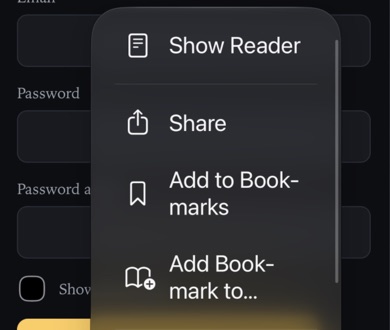
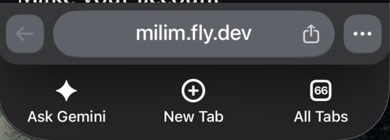
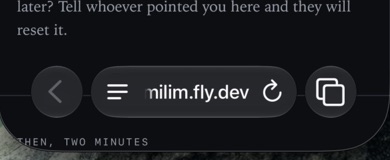
  1. Tap the menu button — the three lines, left of the address in the bar at the bottom.
    Safari's bottom bar: a back arrow, the menu button with three lines left of milim.fly.dev, and the tabs button.
  2. Tap “Share”.
    The menu open, listing Show Reader, Share, Add to Bookmarks and Add Bookmark to.
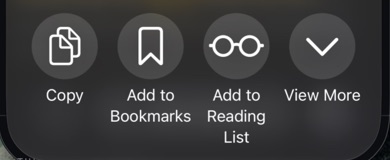
  3. Tap “View More” — the arrow pointing down, at the end of the first row of buttons.
    A row of share buttons: Copy, Add to Bookmarks, Add to Reading List and View More.
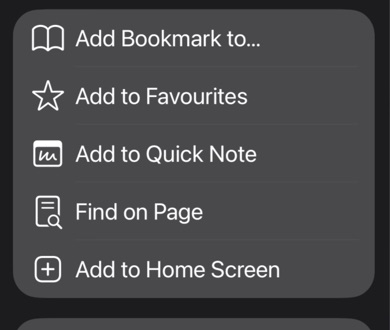
  4. Scroll down and tap “Add to Home Screen”. It is in the second group of rows.
    A list ending with Add to Home Screen, marked with a plus in a square.

On iPhone Chrome

  1. Tap the share icon inside the address bar — the box with an arrow, at the right end of the address. The three dots beside it are a different menu.
    Chrome's bottom bar: the address milim.fly.dev with a share icon at its right end, and three dots beside it.
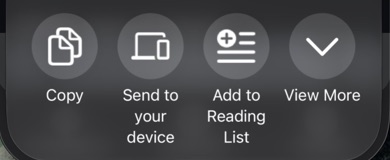
  2. Tap “View More” — the arrow pointing down, at the end of the first row of buttons.
    A row of share buttons: Copy, Send to your device, Add to Reading List and View More.
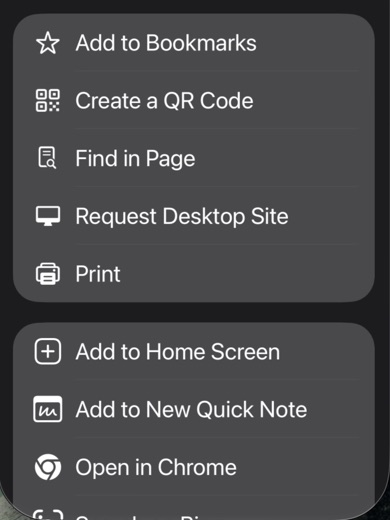
  3. Scroll down and tap “Add to Home Screen”. It is the first row of the second group.
    A list with Add to Home Screen at the top of its second group, marked with a plus in a square.

Then, in both

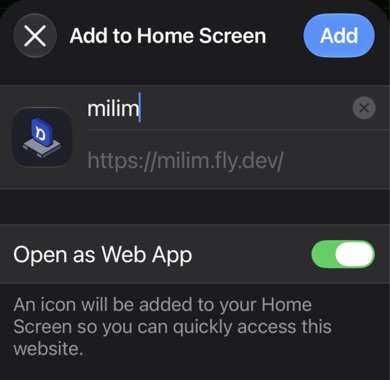
  1. Leave “Open as Web App” on, then tap “Add”. Both browsers show this same sheet, and it is on already.
    The Add to Home Screen sheet: the name milim, the address milim.fly.dev, the Open as Web App switch on, and the Add button at the top right.
  2. Tap the new Milim icon. Sign in with the email and password you chose above. The home-screen icon keeps its own sign-in, separate from the browser's, so it asks once — after that it remembers you.

The words the app uses

Path, node, unit

Four words are worth knowing before you start, because the app uses them everywhere and explains them nowhere.

Path

The winding trail on the Learn screen. Your whole course, top to bottom. You move down it.

Node

One stop on that path — a little object on its own plinth. A single subject — a story, or a set like Milim Words. Tap one to open it.

Unit

A short section inside a node. Five or ten minutes. A node holds several, and you take them in order.

Play

Pick a unit, press Play. That's the whole loop — a run of screens that listen, ask, and move on. Finishing units opens the next node.

A look inside
What it looks like

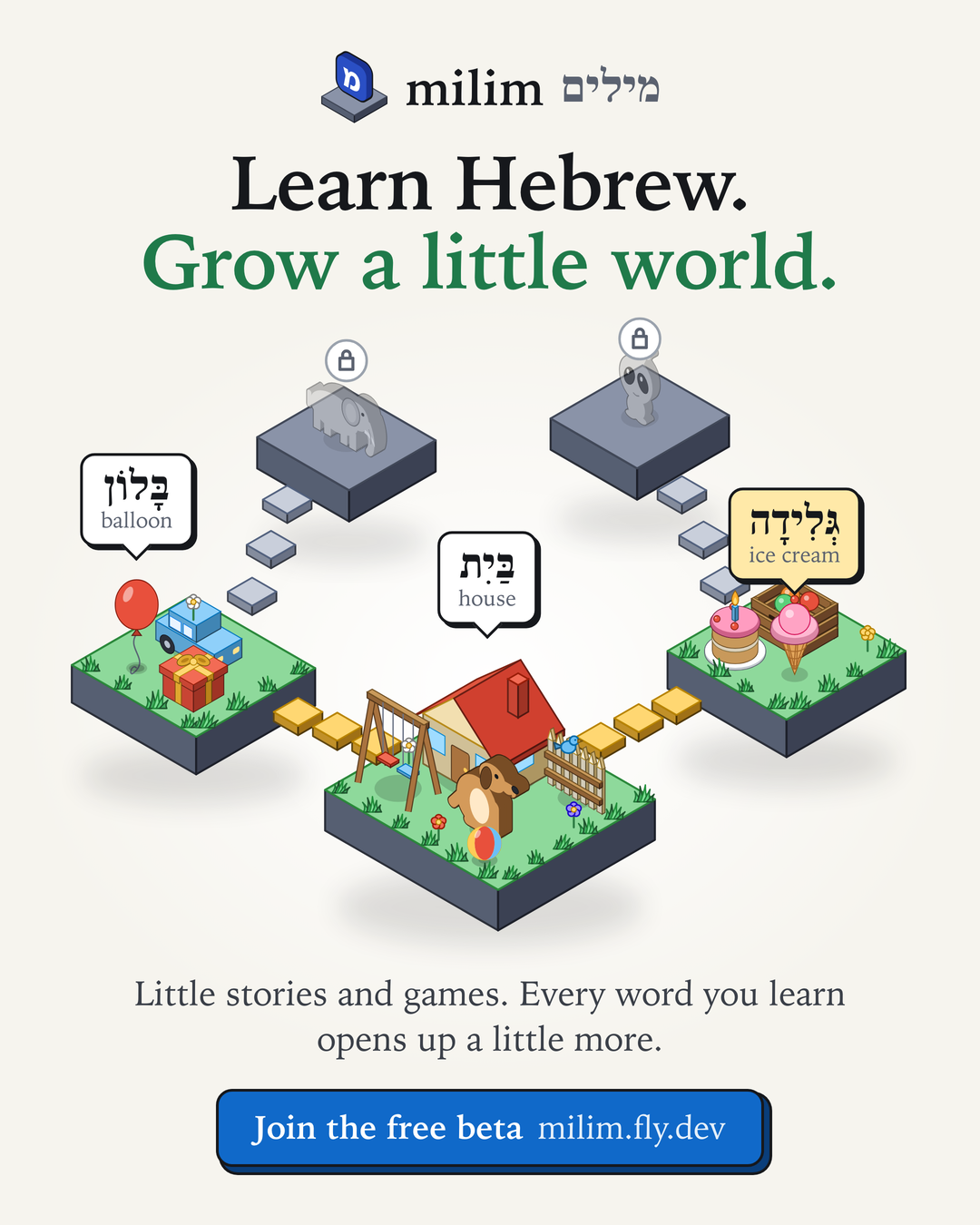
Isometric floating islands with a house, a dog and a swing, Hebrew word bubbles over them and two grey locked islands behind.
Grow a little world. Green where you have learned, grey where you have not yet.
A Hebrew burger order ticks off line by line while the burger stacks itself.
Learn by playing. Read the order in Hebrew, build the burger.

The real thing

What it looks like today

The Learn screen: a path of little isometric objects, each on its own plinth — Greetings, Milim words, Who's who — with stars under each story and game stops branching off.
The path. Stories unlock one after another; games branch off beside them.
A story open: five units, a Play button, and the goals that earn its stars.
A story. A few short units, and stars for reading it through and knowing its words.
One line of Hebrew with a speaker button beside it, a new word picked out in colour, and its English underneath.
A line of real dialogue. Tap the speaker as often as you like — new words are picked out — then continue.
A question: put a line back together from a bank of Hebrew word tiles.
Then it checks. Put the Hebrew line back together from its words — wrong answers cost nothing.
Build it: burger. An order in Hebrew above a tall burger stacked on its plate beside the burger stand, with the pictures to build it from along the bottom.
Games. Build it stations — a burger, a picnic basket, a suitcase — plus Find the word, Type the gap and more, each on the path.
The Find the word game: five levels in a row, with level 2 offered for twenty keys, or one round to try it first.
Levels. Every game has five. Harder ones cost keys, which you collect as you learn words — or try one round first.

It grows with you

The app turns into Hebrew as you learn

The bottom bar starts in English. Once you know the seven Milim words, the app offers to switch its labels to Hebrew, so the app itself keeps quizzing you — your choice, and Settings can change it back. These are the same three tabs:


What a unit feels like

Listen, read, continue

A line of Hebrew plays. Replay it as often as you want — there's a repeat button right beside it, and a slider at the top to slow it down. Read it aloud if you can. Then press continue.

Every so often it stops and asks you something: do you know this word?, what does this line mean, put the line back together from its words. Wrong answers cost you nothing — it just shows the word again later.

Learn

Your path. Stories and the games that branch off them — this is where you actually study.

Trophies

Your trophies and streak, and the stats behind them.

Guide

Short cards explaining any screen. Open it whenever.

The most important button

The flag, top right

This is the one thing I'd genuinely ask you to use. I study with this app every day, which means I've gone blind to problems that are probably obvious to you in the first ten minutes.

Every page has one, in the top right corner.
  • Tap it the moment something feels off — don't finish the unit first, you'll forget which screen it was.
  • Type anything. “this is broken”, “too hard”, “too easy”, “I don't get this screen”, “the voice is wrong here”, “love this one”. One blunt line is more useful than a careful paragraph.
  • Send. That's it — nothing else to fill in, and no reply expected.

It sends

Your note, which page you were on, which line, and what you answered.

It doesn't send

Anything about your phone, your browser, or where you are.

Open Milim

Sign in with the email and password you chose.
No deadline, no streak to protect — come and go as you like.